The ending of Franck's 'Prelude, Aria, and Finale'
A thematic analysis |

random trip report |
I was discussing, with a friend, the fact that Beatles songs have real endings rather than fade-outs. This led to re-watching David Bruce's excellent video about endings; he contrasts endings in which intensity builds to a peak, versus those in which it dies away.
I love a good ending, especially the slow/quiet kind. My favorites include the Liszt Piano Sonata and Franck's 'Prelude, Aria, and Finale'. The latter is wonderful but thematically complex; it took me a long time to figure it out.
The Franck is an example of cyclic form, in which themes from one movement appear in other movements. In this case there are three movements; the last one (Finale) incorporates themes from the first two, in one case superimposing them. The result is structurally amazing and at the same time beautiful.
To analyze what Franck does, I'm going to identify various themes and fragments, and give them codes like "2A": the first theme from movement 2. In some cases I give them descriptive names too. If a theme has multiple fragments, I call them e.g. "2D.1" and "2D.2".
Here's an excellent recording, by Stephen Hough (samples below are from here): Prelude, Aria, Finale. I encourage you to listen to the whole piece first, and follow along in the score (ed. Vincent d'Indy).
Movement 1 (Prelude)
Theme 1A: 'Heroic'
The movement opens with a 14-bar theme, 1A.
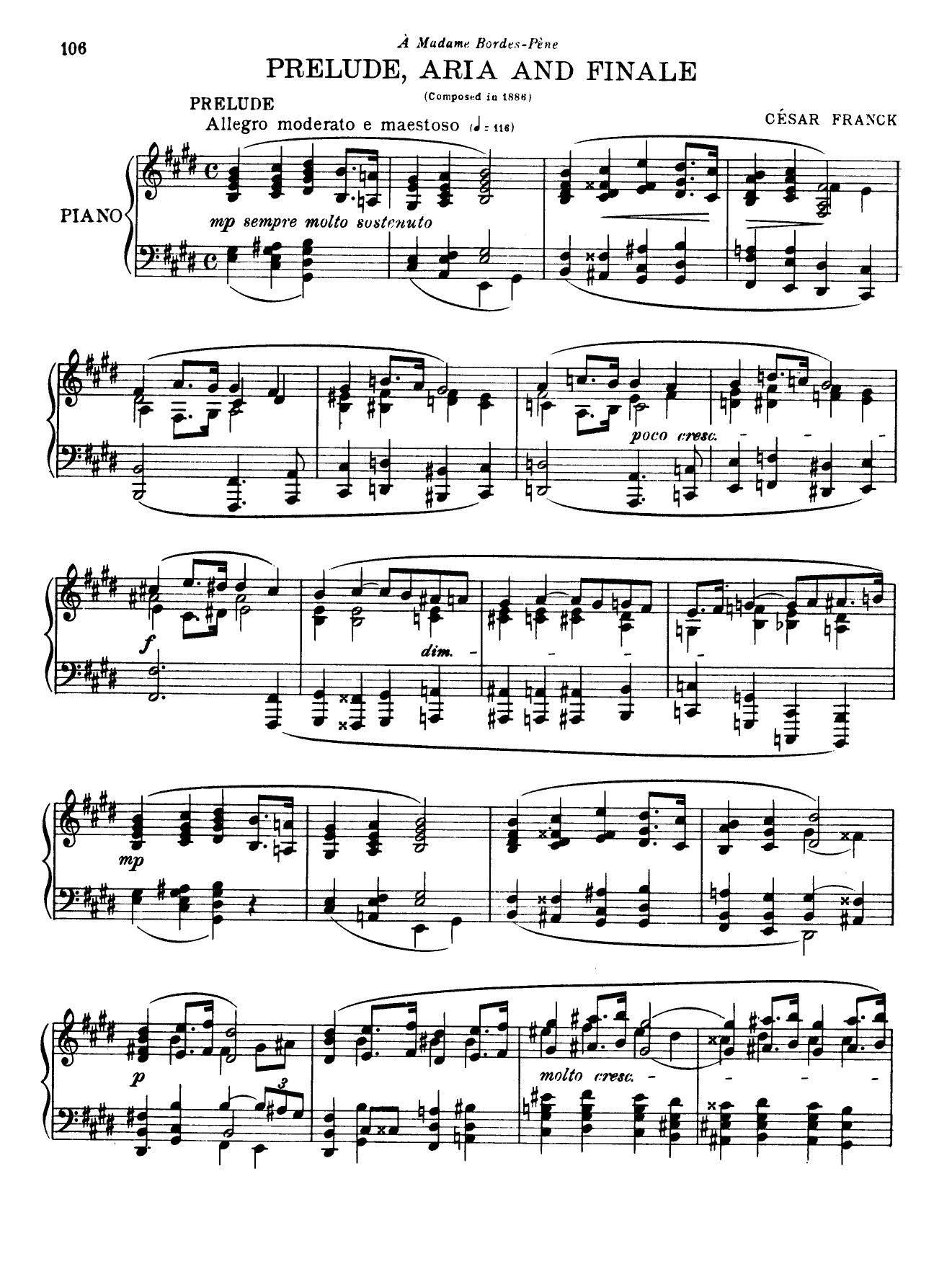
This is repeated several times, in different forms; the movement is sort of a theme and variations. The 1A theme is reprised in the last movement. There's also a wonderful B theme, not used in later movements).
Movement 2 (Aria)
This movement has lots of themes. Almost all them will appear later!
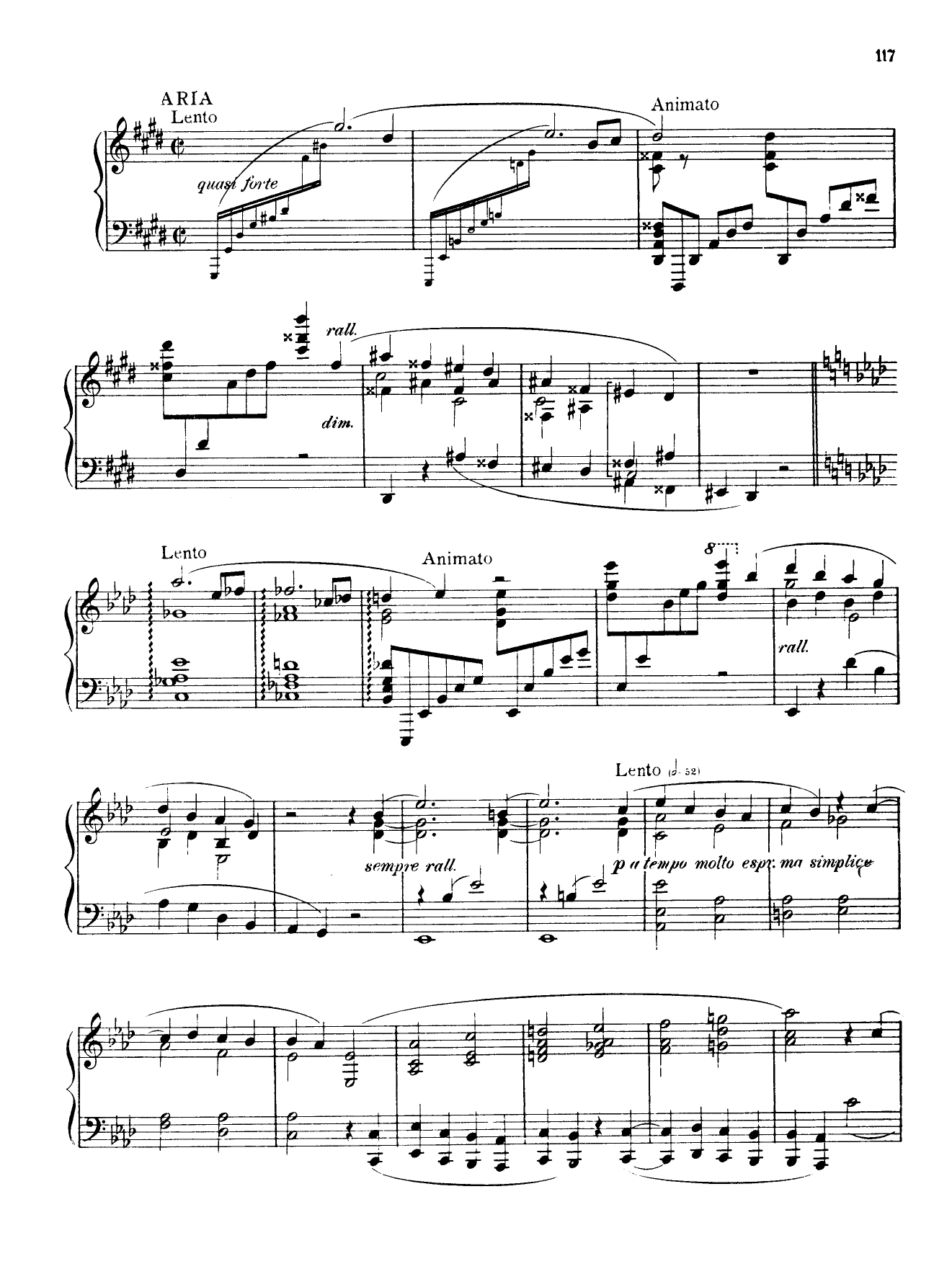
Theme 2A: 'Declamatory' (short version)
The movement starts with a 4-bar declamatory introduction:
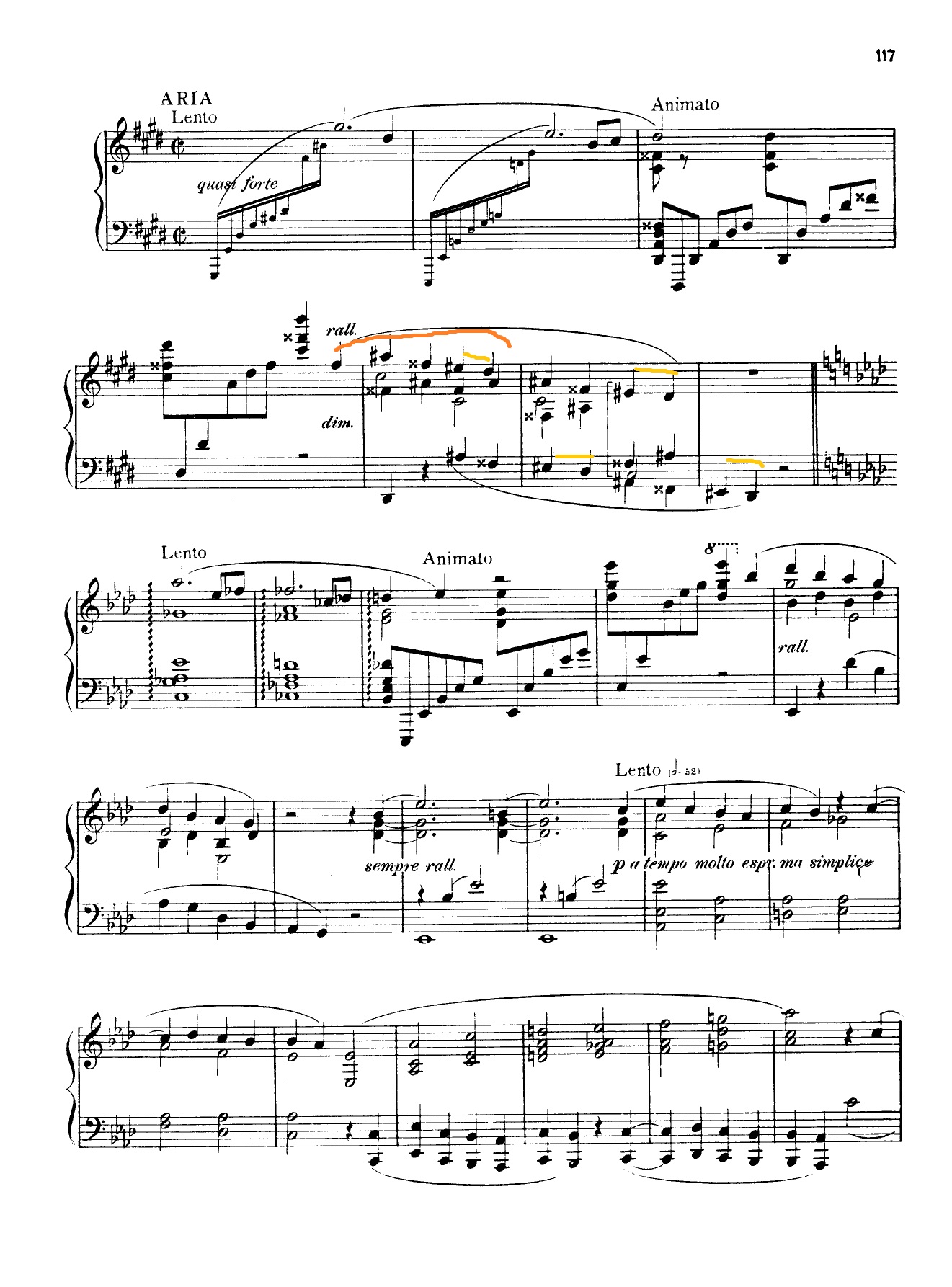
Theme 2B: Descending chord
This is followed by descending D#7 chord, presented as a canon with passing tones (yellow) that jump between octaves. Not exactly a theme, but we'll see it later, and the first 5 notes (orange) anticipate the next theme, 2C.
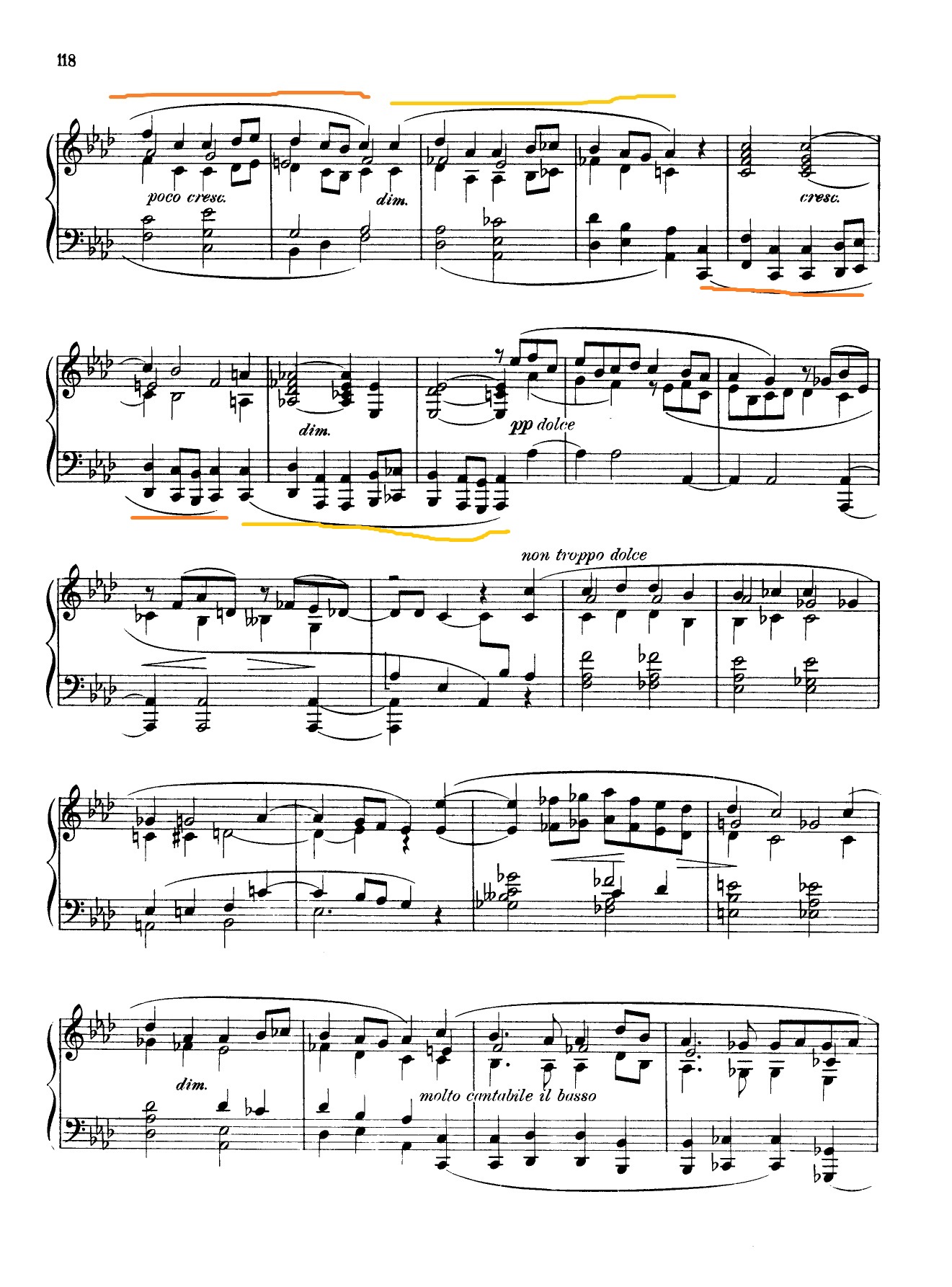
Theme 2C
After the introduction, we come to the main 4-bar theme, repeated in the bass.
Theme 2D: Question and Answer
This is followed by a theme consisting of two similar 2-bar halves. The first (Question, in orange) moves to an unsettled Fm chord; the second (Answer, in yellow) resolves reassuringly to Ab. I'll call them 2D.1 and 2D.2; the latter reappears a lot. The theme is repeated in the bass.
Theme 2E and 2E'
This is followed by a 4-bar theme, in the form of a little canon. At first this seems like a transition - my piano teacher Chip called it 'blather' - but it'll be important later!
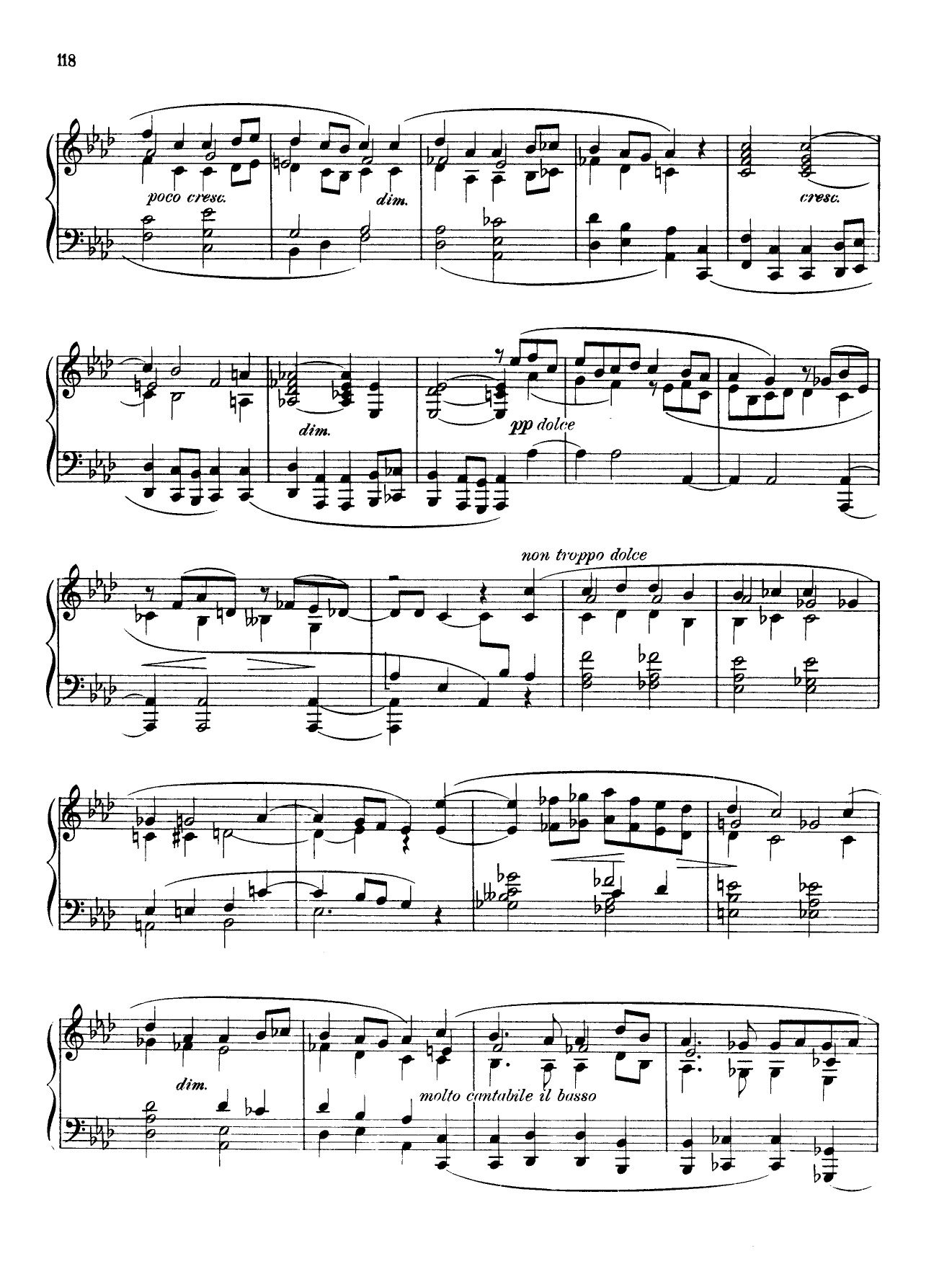
The theme appears again on the next page, this time ending in an upward direction rather than downward; I'll call this version 2E'.
Theme 2F
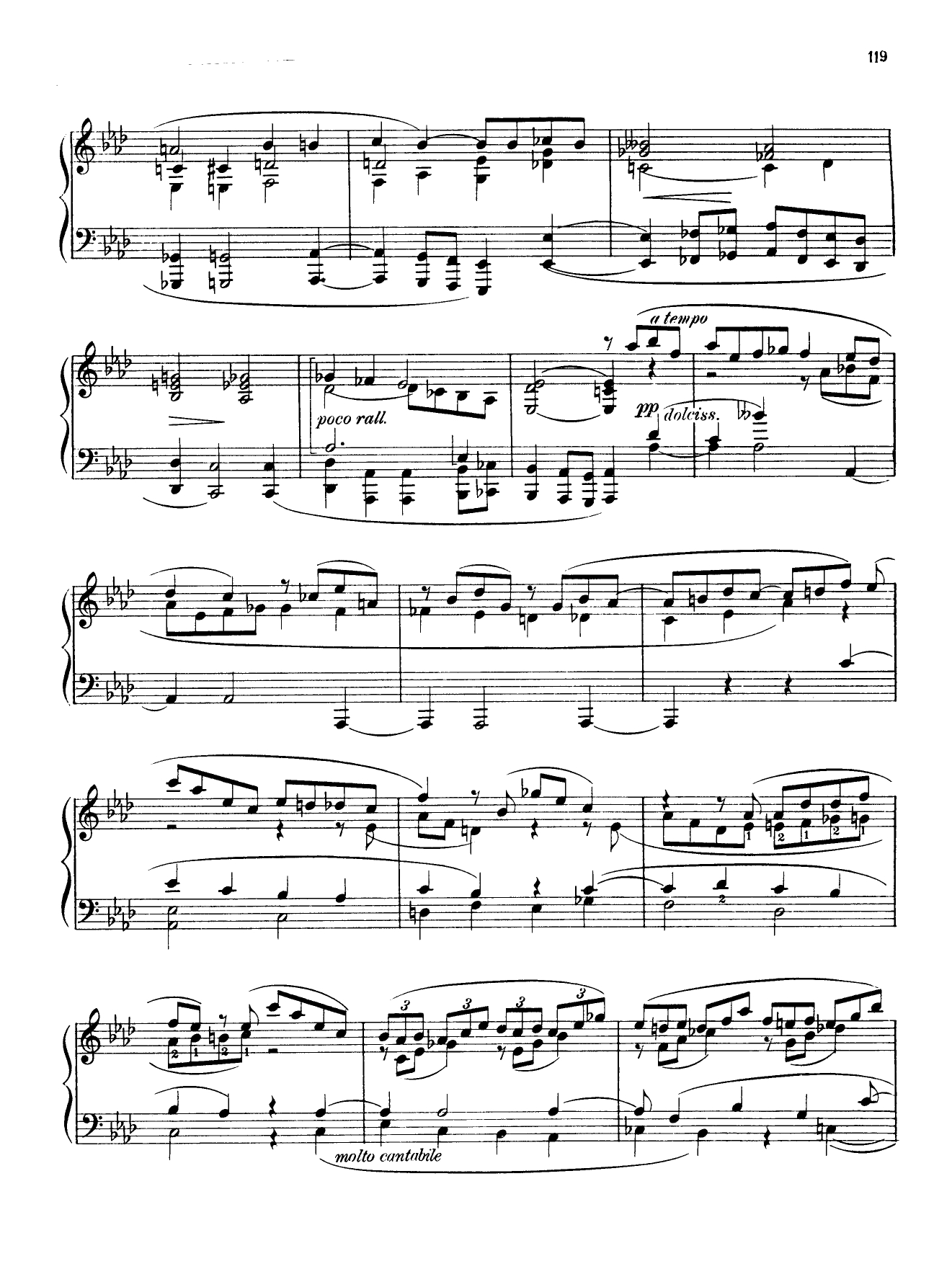
Theme 2E is followed by a new 8-bar theme. The first 4 bars (2F.1, in orange) start in Fm; the next 2 bars (2F.2, in yellow) start on a diminished chord. The last 2 bars (2F.3, in blue) are in fact 2D.1 - the Answer theme - which bring the harmony back to the home key of Ab.
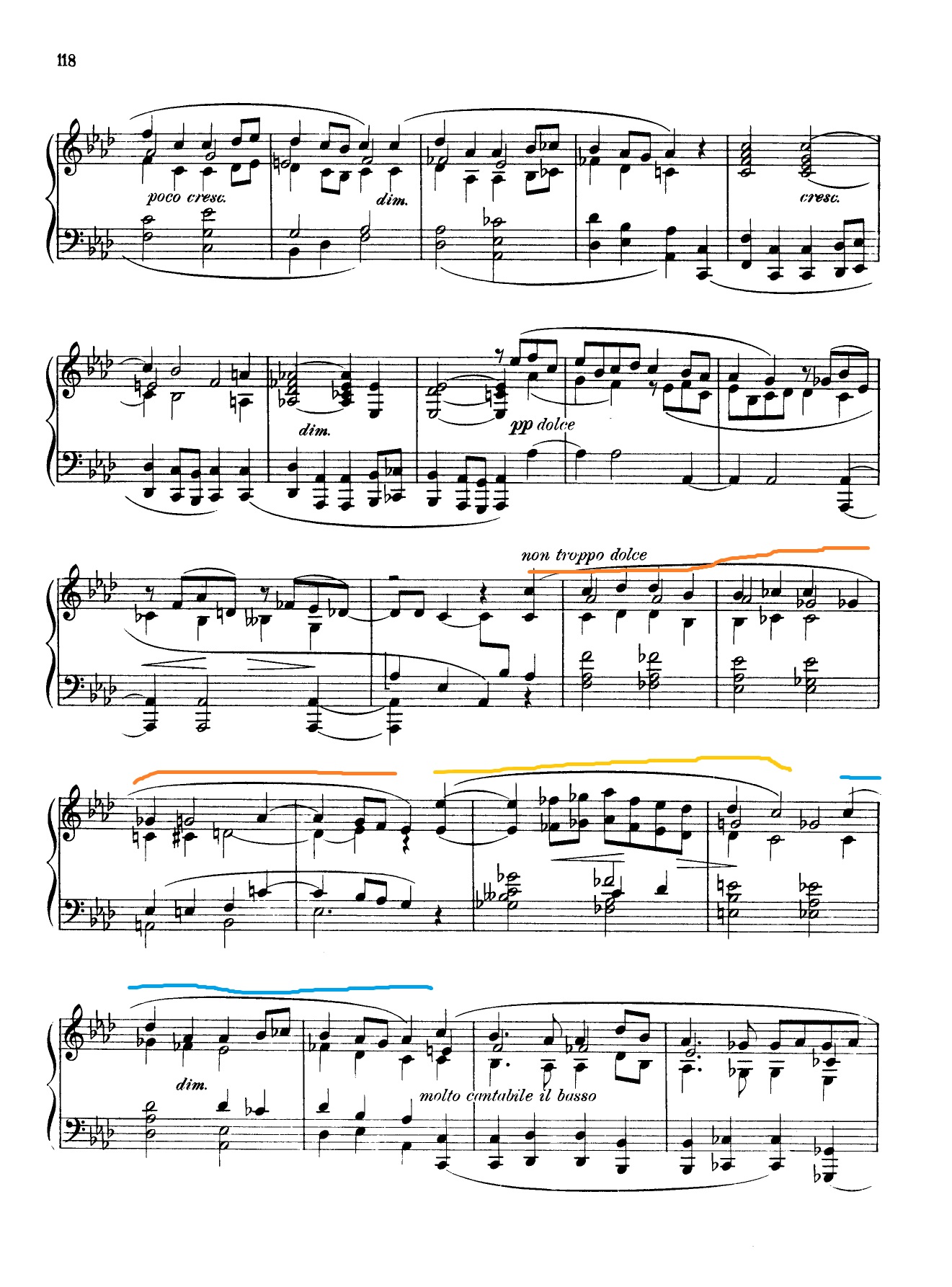
Theme 2F is then repeated in the bass, with a new melody in the treble.
The Aria continues with repetitions of themes 2E, 2C, 2D, and 2F, with increasingly ornate accompaniment, in triplets and then sixteenths.
Theme 2A: Declamatory (full version)
After a final version of 2F, we switch to a new texture, with repeating 8th-note chords in the RH. The melody starts with the introductory Declamatory theme (2A), but is extended for an additional 11 bars.
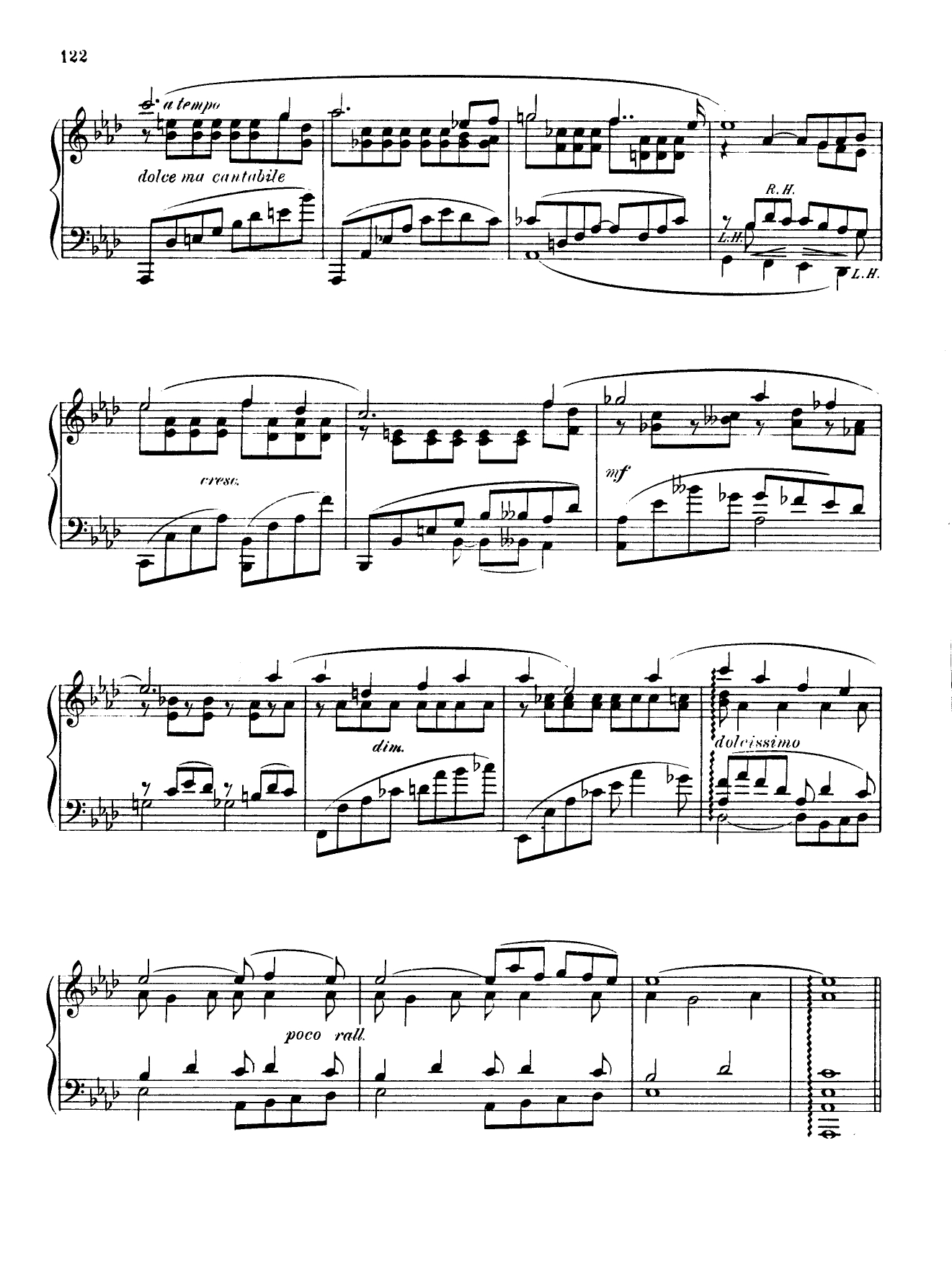
The melody and accompaniment borrow snippets from other themes. The movement ends with a calm V-I cadence.
Movement 3 (Finale)
The movement starts with a creepy, agitated theme I'll call the Wild Ride:
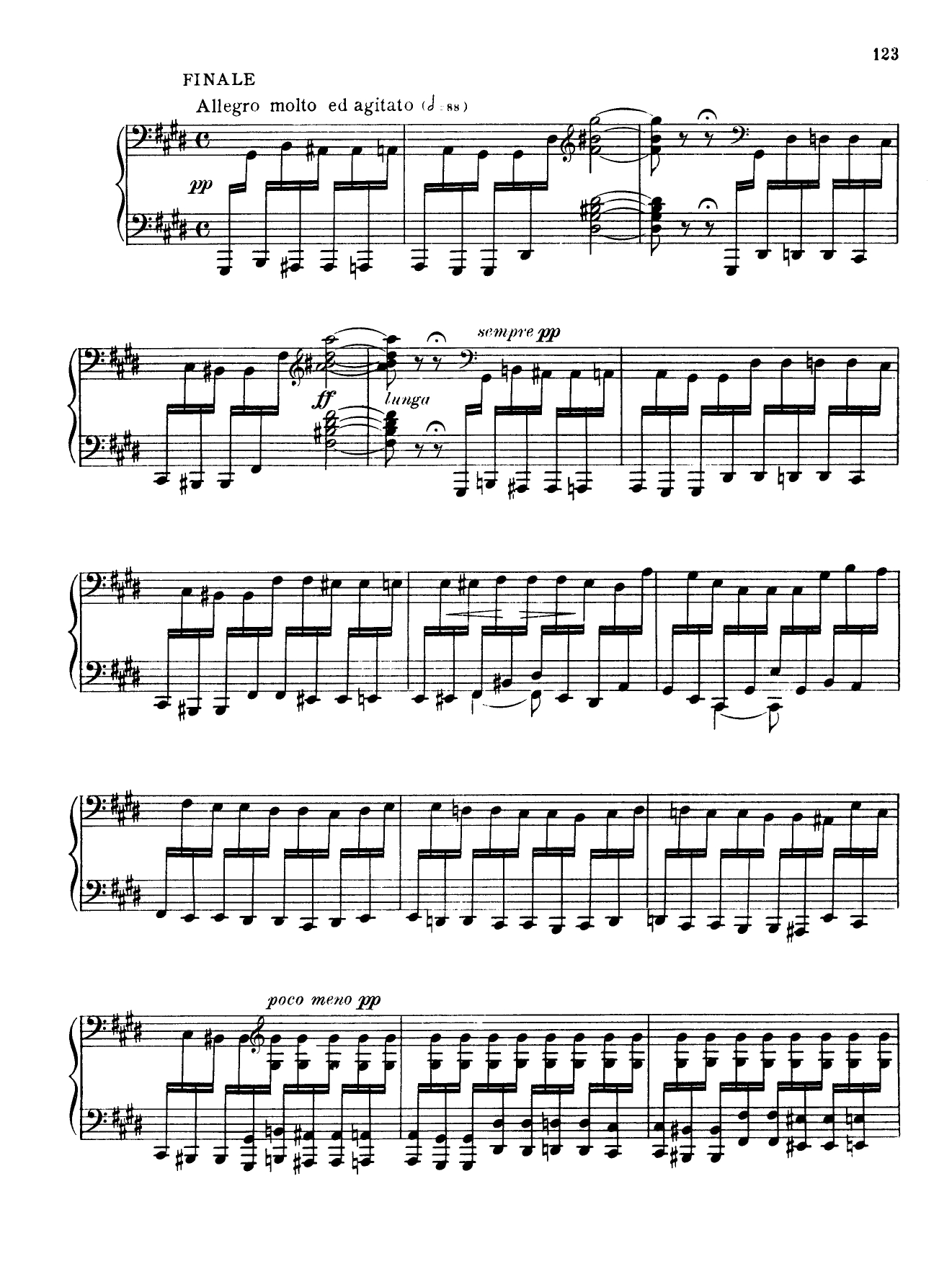
This builds in volume and intensity, leading to a manic fanfare and elaboration.
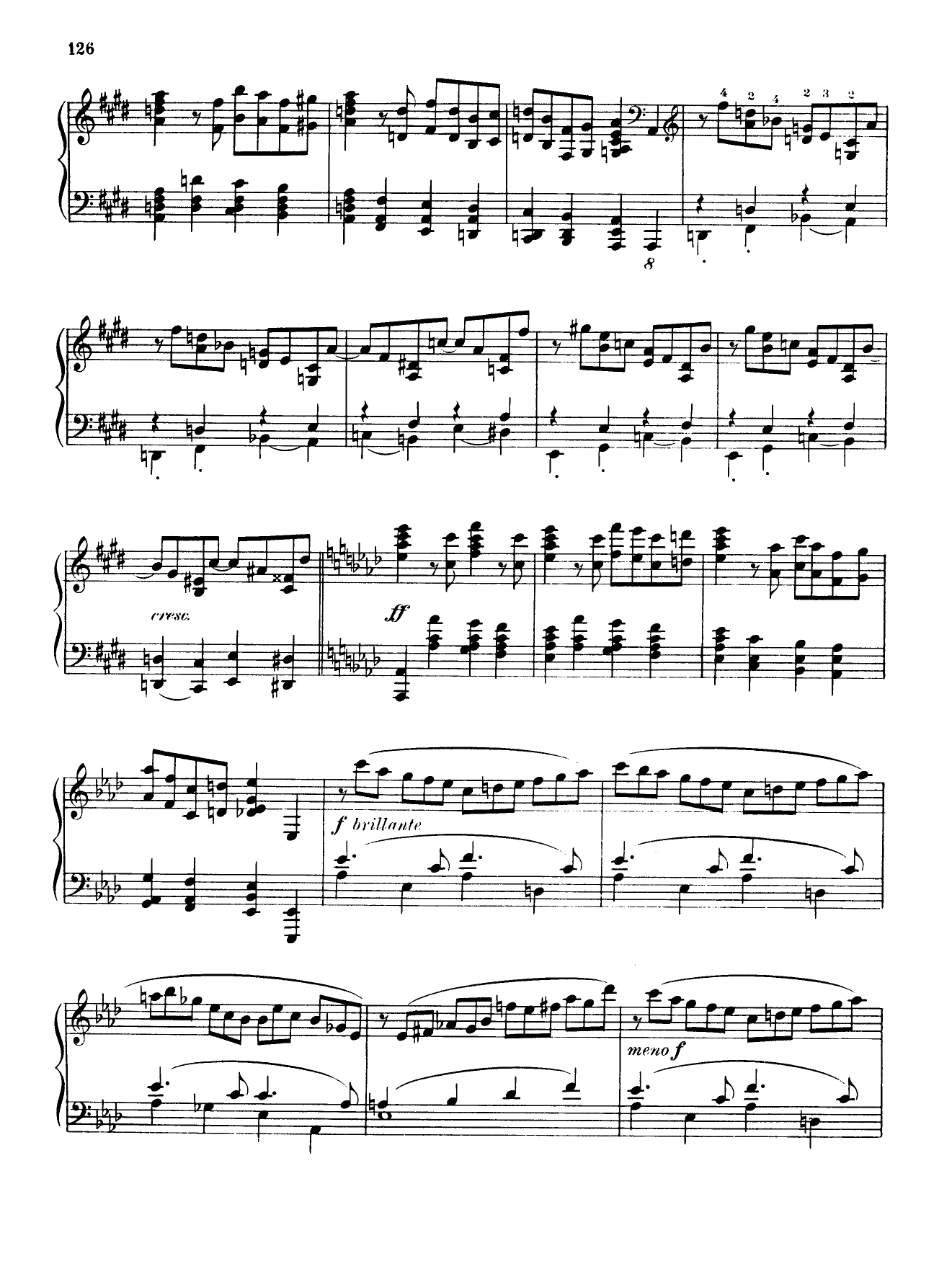
This leads into a harmonized version of the Wild Ride. This gradually calms down, there's a key change, and suddenly theme 2C reappears, dolcissimo, over surging 16th note arpeggios:
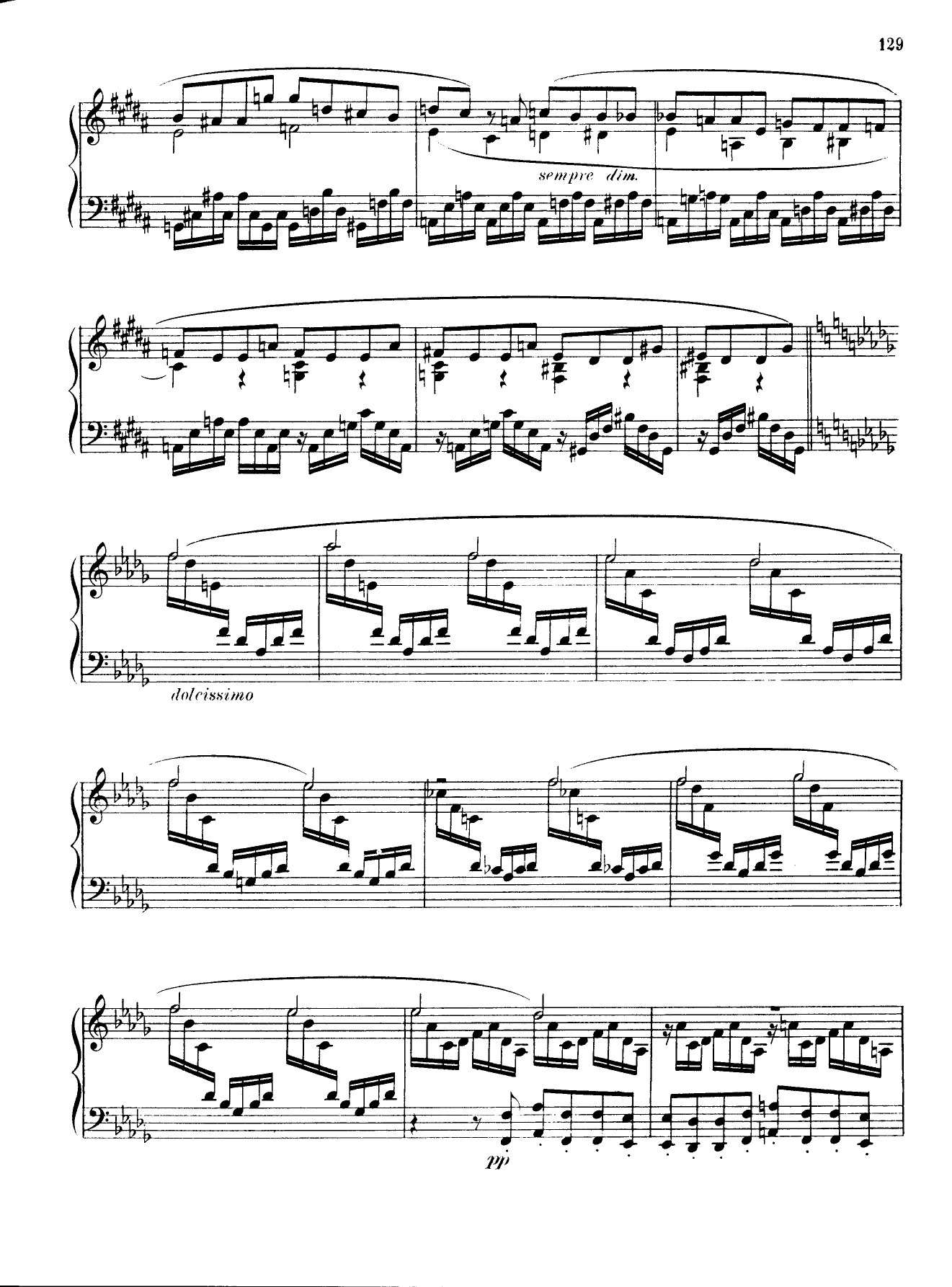
The Wild Ride theme briefly interrupts this, but then we resume, this time with theme 2D.
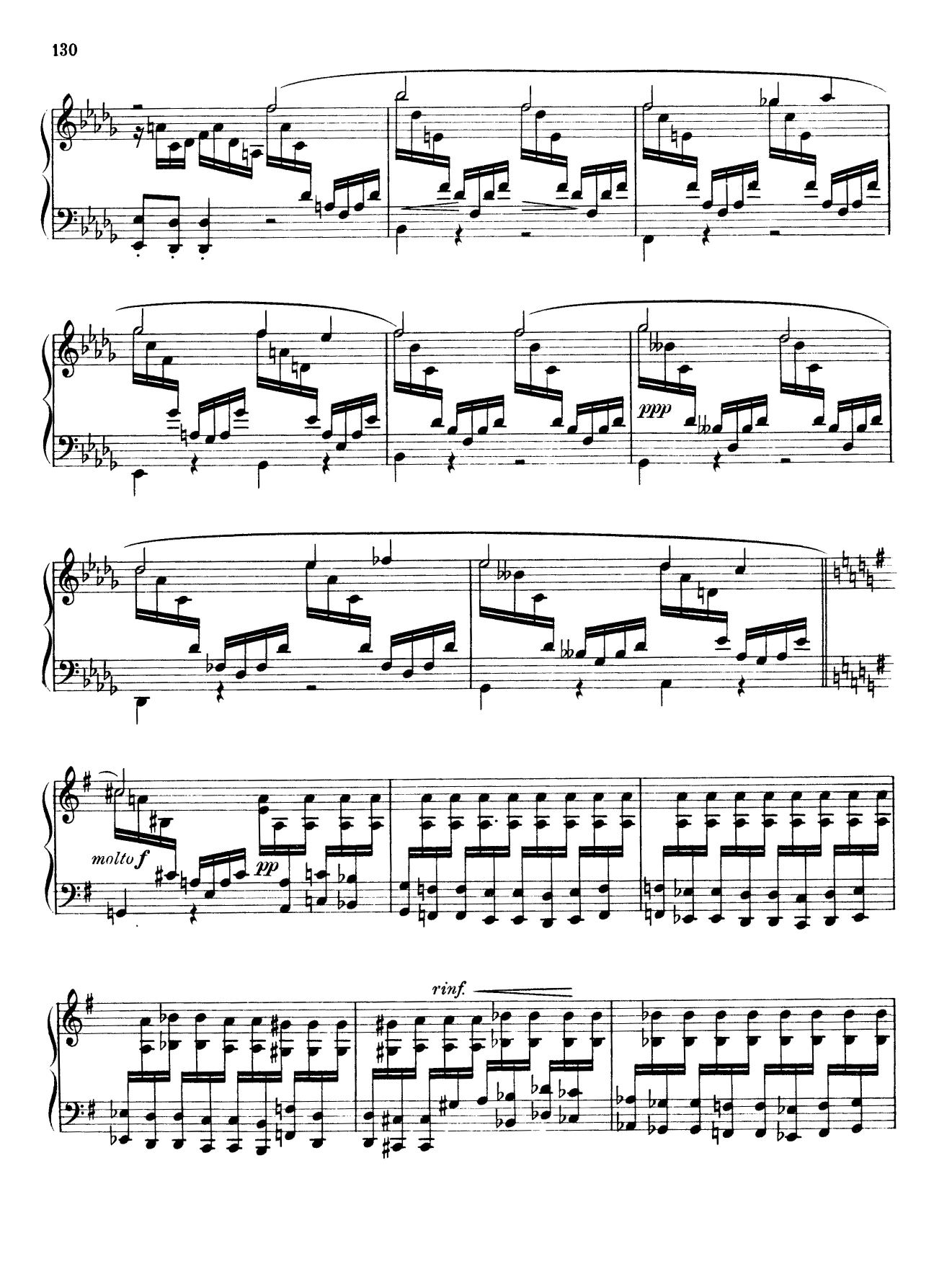
The Wild Ride resumes, even wilder, in double octaves. The Fanfare and elaboration repeat, with ever-increasing energy.
Finally the Heroic theme (1A) dramatically returns, fortissimo, with thundering octaves in the bass.
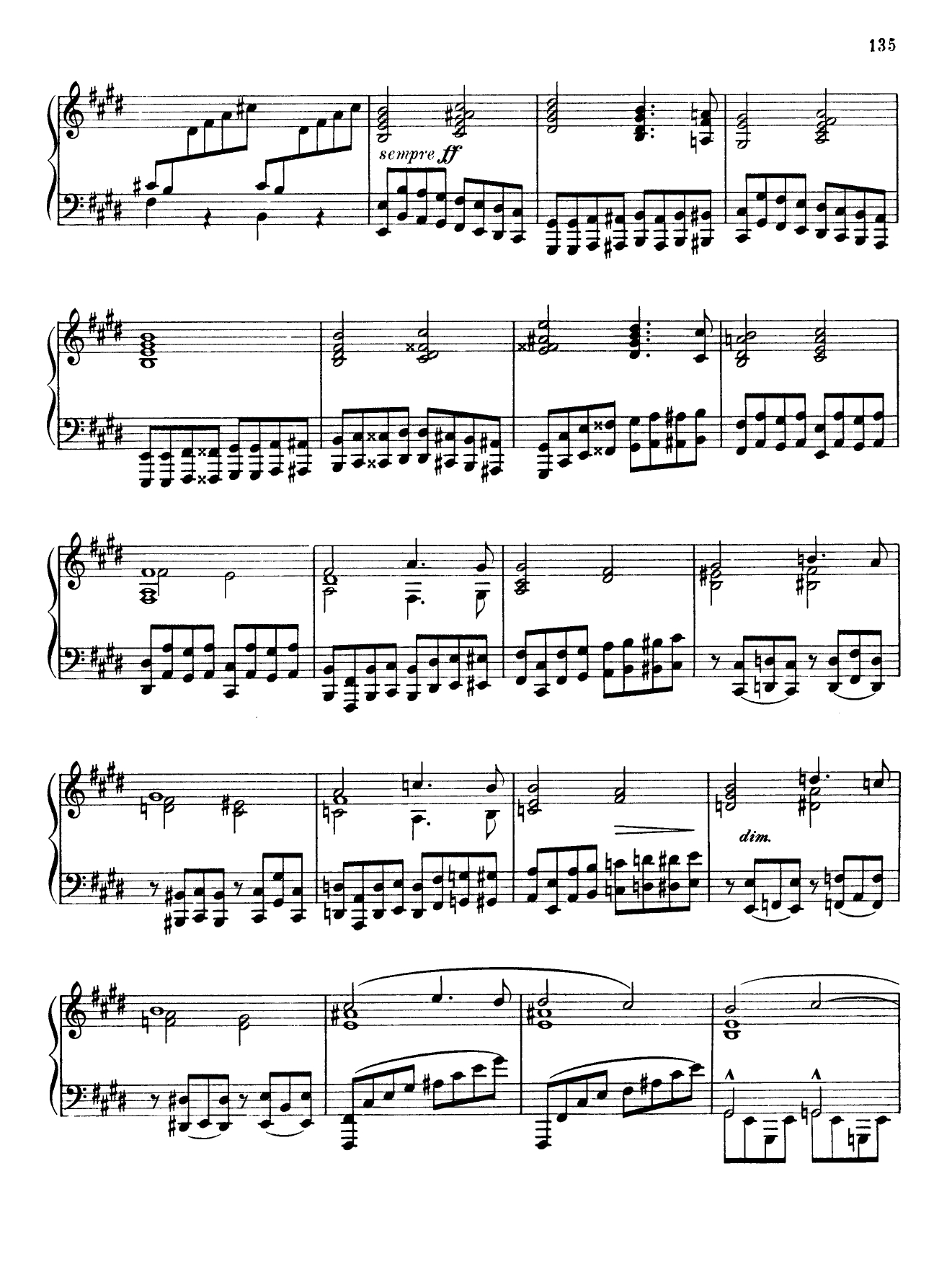
This gradually calms down, and the octaves become arpeggios.
We now come to what I view as the ending - a long coda that reprises other themes from the Aria.
It starts with a stunning section that superimposes two melodies. In the soprano is the Heroic theme. But it's marked 'dolcissimo', and is nostalgic rather than heroic. In the tenor is - surprise! - the Declamatory theme, 2A (full version). I played this piece for years before I realized this.
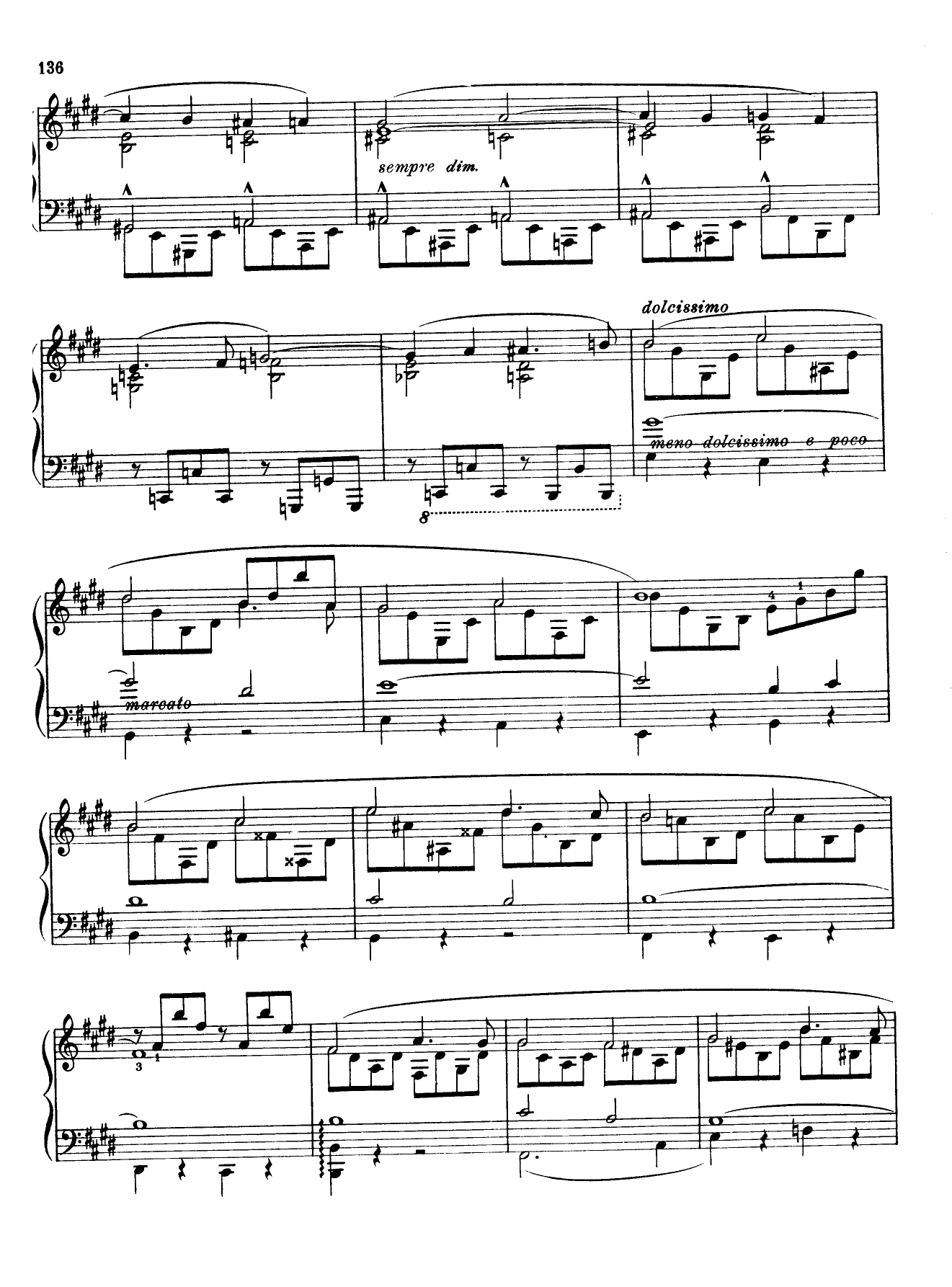
As if by magic, the two melodies mesh perfectly. The tenor melody is marked separately as meno dolcissimo e poco marcato: Franck wants it to stand out above the soprano (Hough gets the dynamics exactly right). This duet continues for 22 measures, ending not in the home key of E but in Em.
There's a 6-measure transition in which the IV chord goes from Am to A; the RH is a fragment from theme 2D.1.
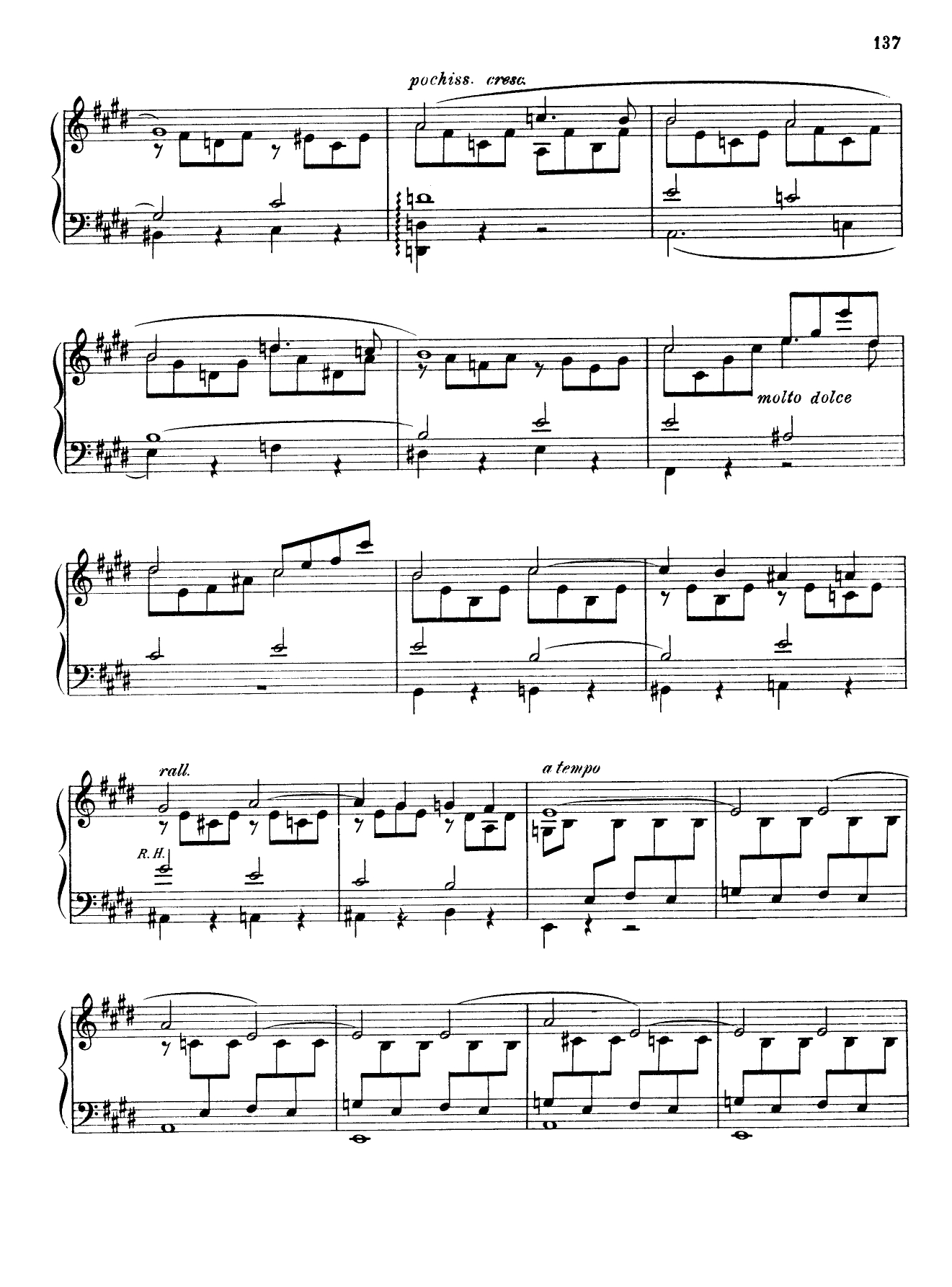
This is followed by 2F.2, the second part of theme 2F; then for the final time, the Answer theme 2D.2.
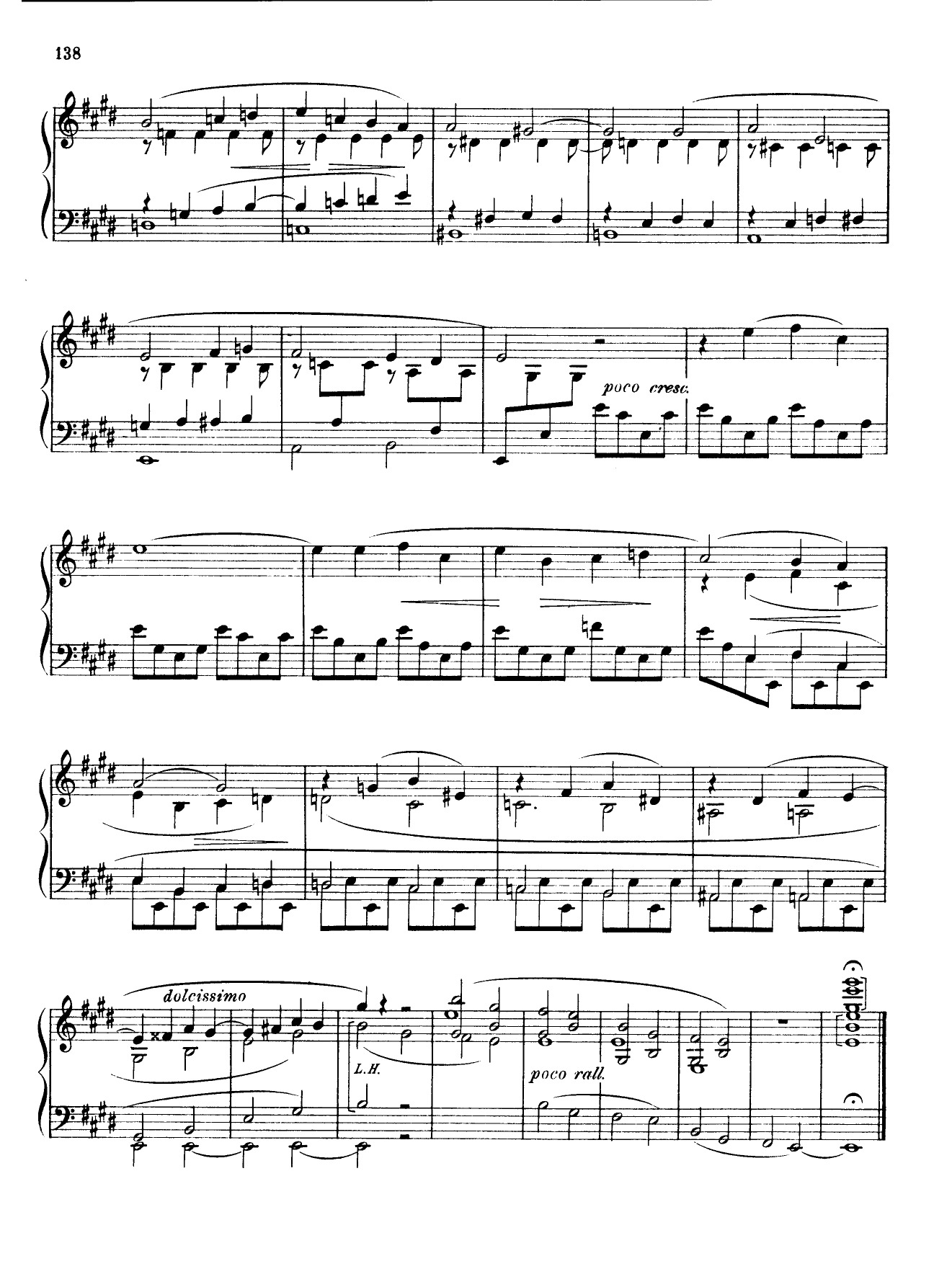
Franck could have ended the piece soon after this, but it wouldn't be settled enough. So he reprises the 'blather' theme, 2E (the 2nd version, with the rising end).
Finally, to complete the settling process, he uses the Descending Chord theme, 2B, this time on the final E chord rather than a 7th chord. As this dies away, the piece ends with a glistening E chord with the third on top.
(Hough seems to miss some notes in the final chord).
Comments
Franck wrote this piece (1886-7) in a period of tremendous musical inspiration, near the end of his life. The piece is bursting with great harmonic and melodic ideas. When a composer has this many ideas, the result is sometimes an episodic hodge-podge.
The piece has an abundance of ideas, and (as shown above) they're assembled in clever ways. But beyond this:
- The piece is more organic than episodic. It doesn't sound architected. Each melody flow into the next. Some of them are kind of similar: to parse them, you have to study the piece closely.
- Franck uses the same themes in different ways; for example, the Heroic theme is by turns noble, bombastic, lyrical, and wistful.
- The overall shape of the piece is coherent: mvt. 1 is a varied landscape; mvt. 2 is a dreamy fantasy; mvt. 3 starts as a terrifying nightmare, but gradually returns to reality, then sublimates into a higher dimension.